
CASE STUDY · REAL ESTATE
A rural brokerage gets its own full-MLS home search
An independent real estate brokerage wanted buyers to search every listing in its region on its own website, not on a national portal. Peace Builders built the site and the data pipeline behind it: MLS listings synced into the brokerage’s own database, a fast search with a map, and daily alerts that bring buyers back.
Website · Map search · Saved-search alerts · Agent dashboard
2 hrs
between syncs with the regional MLS
19,044
stale records cleaned out of the listing database
8.3 → 1.4 MB
page weight for a screen of listing cards
2.8 → 65 KB
of content search engines can read on the homepage
At a glance
Who
An independent, rural real estate brokerage
Industry
Real estate
Platform
Website with MLS search, a map, buyer accounts and an agent dashboard
Timeline
Built from March 2026; improved continuously since
Engagement
Custom website and data pipeline
Built with
React, TypeScript, Firebase, Cloud Functions, a RETS MLS feed, Leaflet maps
Last updated September 30, 2026
Why the brokerage wanted its own search
Buyers start on the big national portals, and every search there sends leads somewhere else. A small brokerage’s own website usually shows only its own listings, or embeds a generic search widget that looks and feels like someone else’s product.
Rural buyers also shop differently. Acreage matters as much as bedrooms, connections are often slow, and many listings sit out in the country rather than in a neighborhood.
The brokerage wanted a site that searched every listing in its region, felt fast on a phone, kept buyers coming back, and put every inquiry in front of its own agents.
How we approached it
- Own the listing data. Instead of renting a widget, a scheduled job pulls the regional MLS feed into the brokerage’s own database every two hours, across eight property classes.
- Build for rural buyers. Acreage is a headline number on every listing, photos are sized for phones, and pages recover on their own when a mobile connection drops.
- Turn visits into leads. Buyer accounts, saved homes, saved searches with a daily email, and inquiries routed straight to the brokerage’s agents.
What buyers see
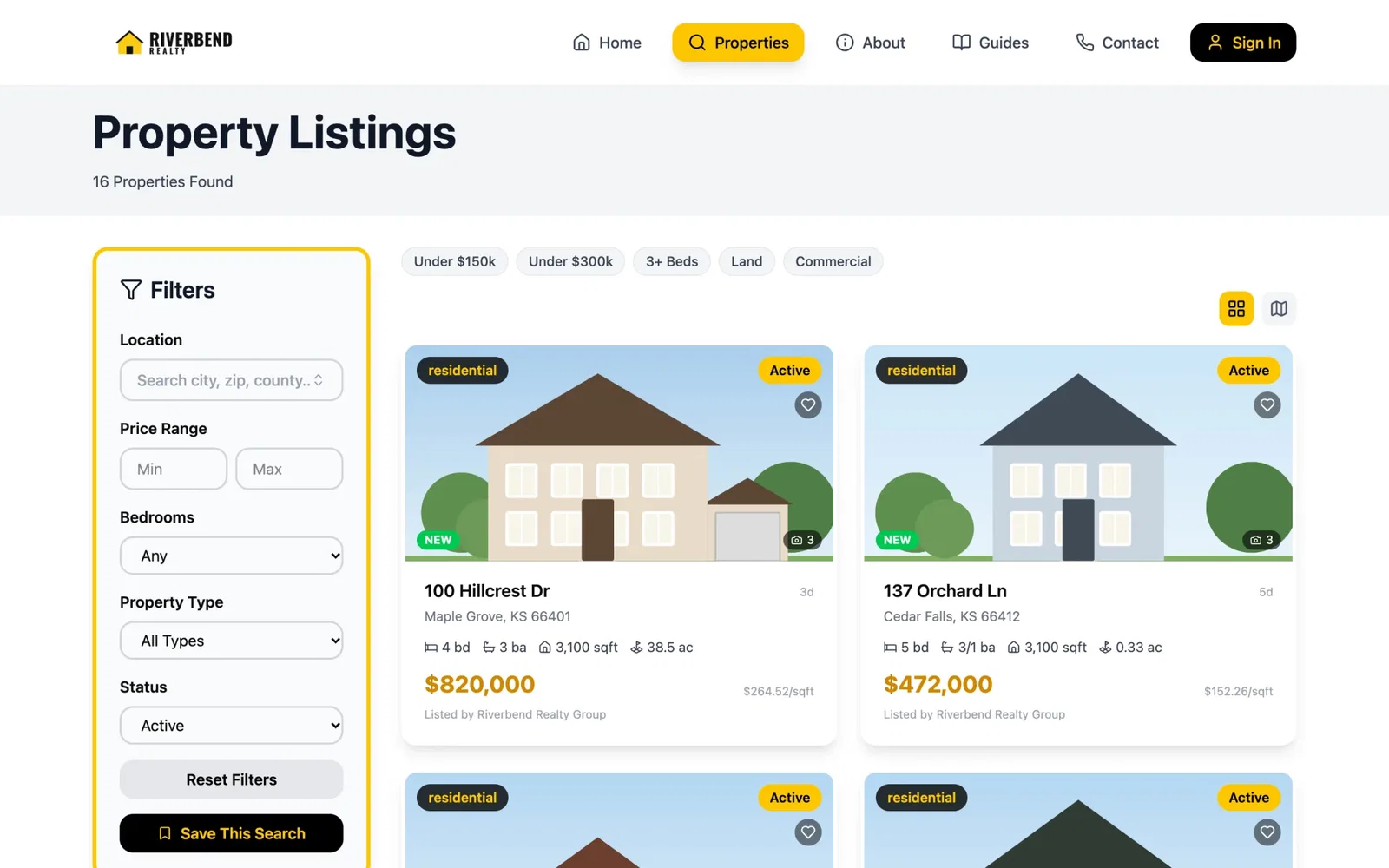
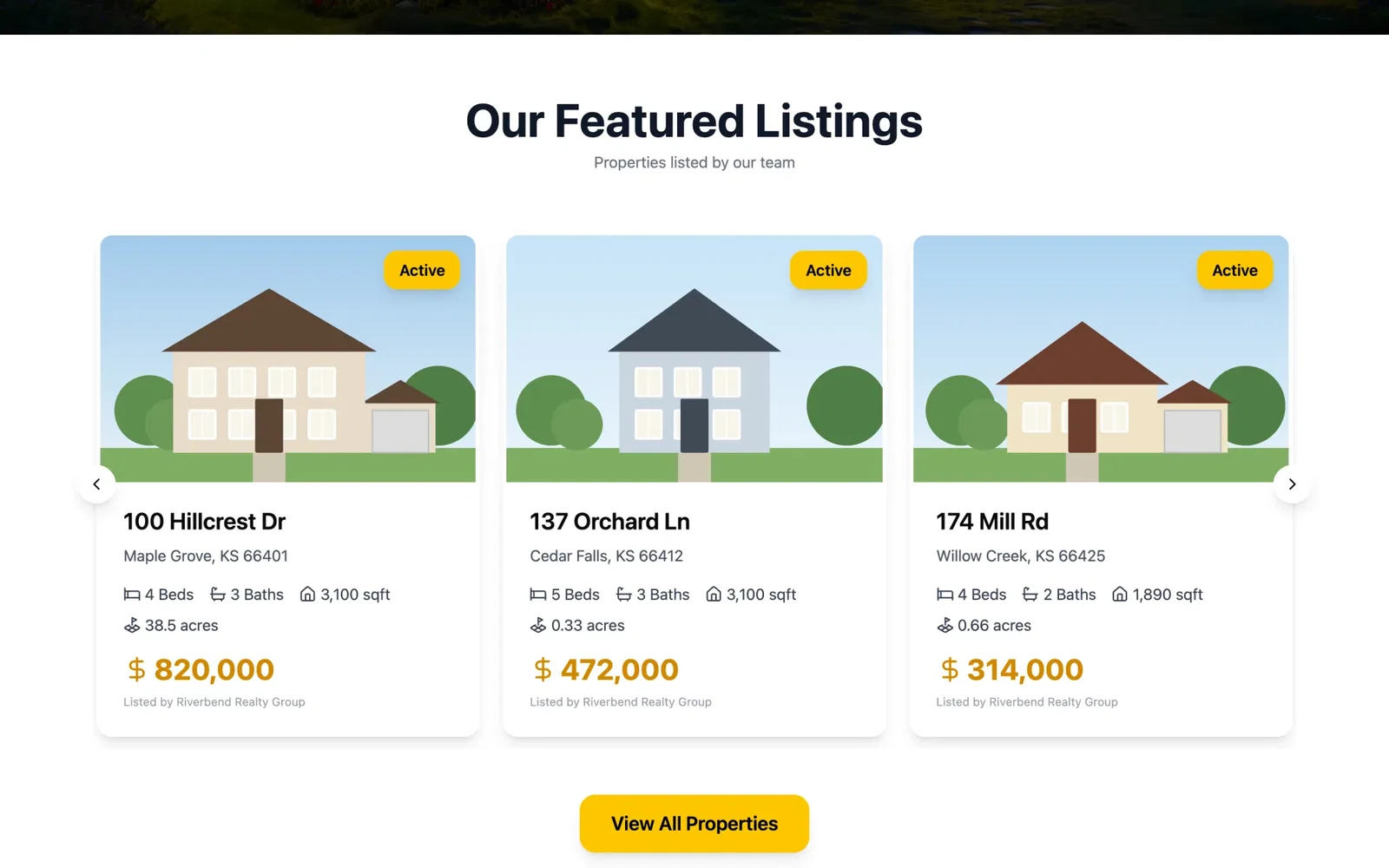
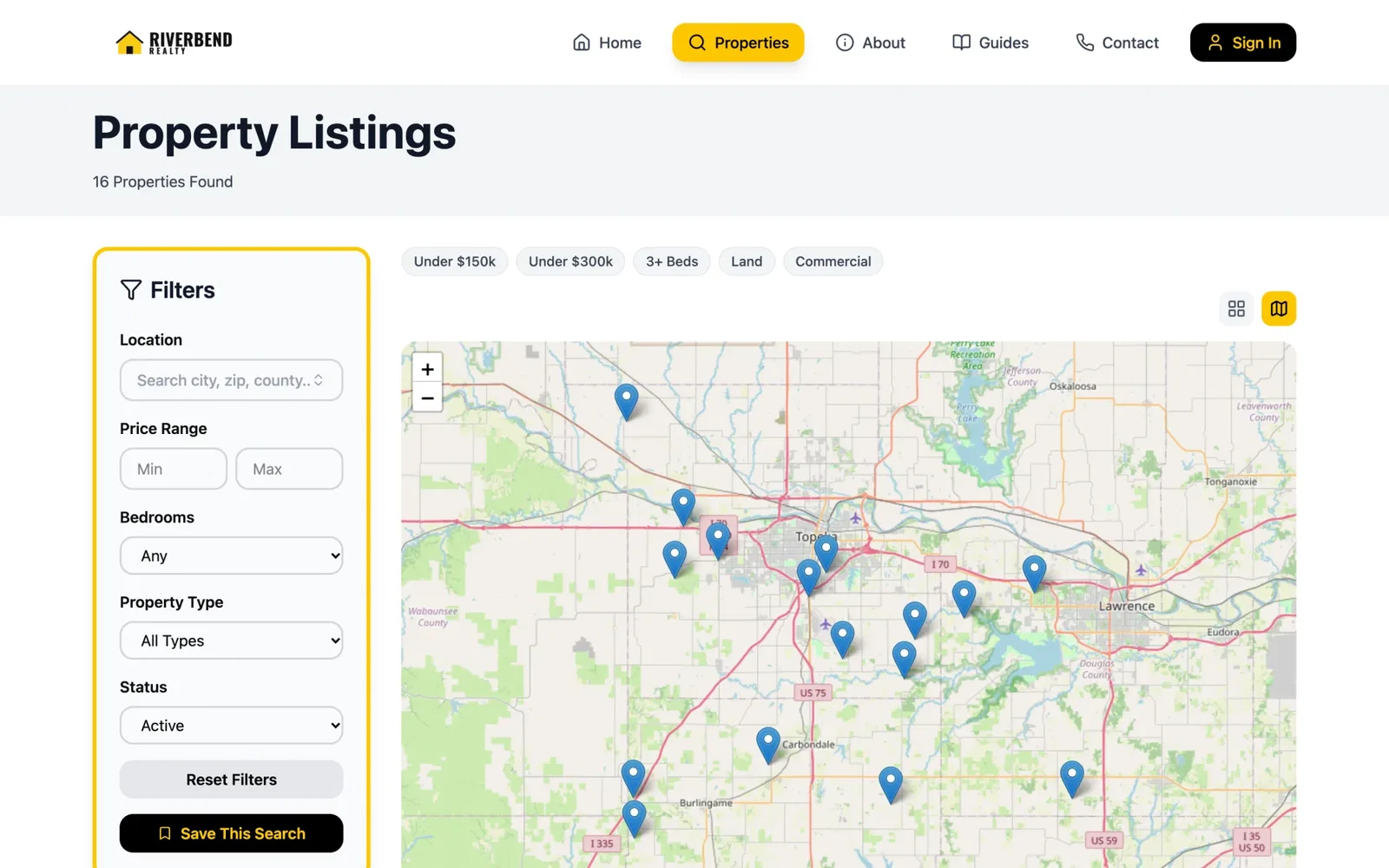
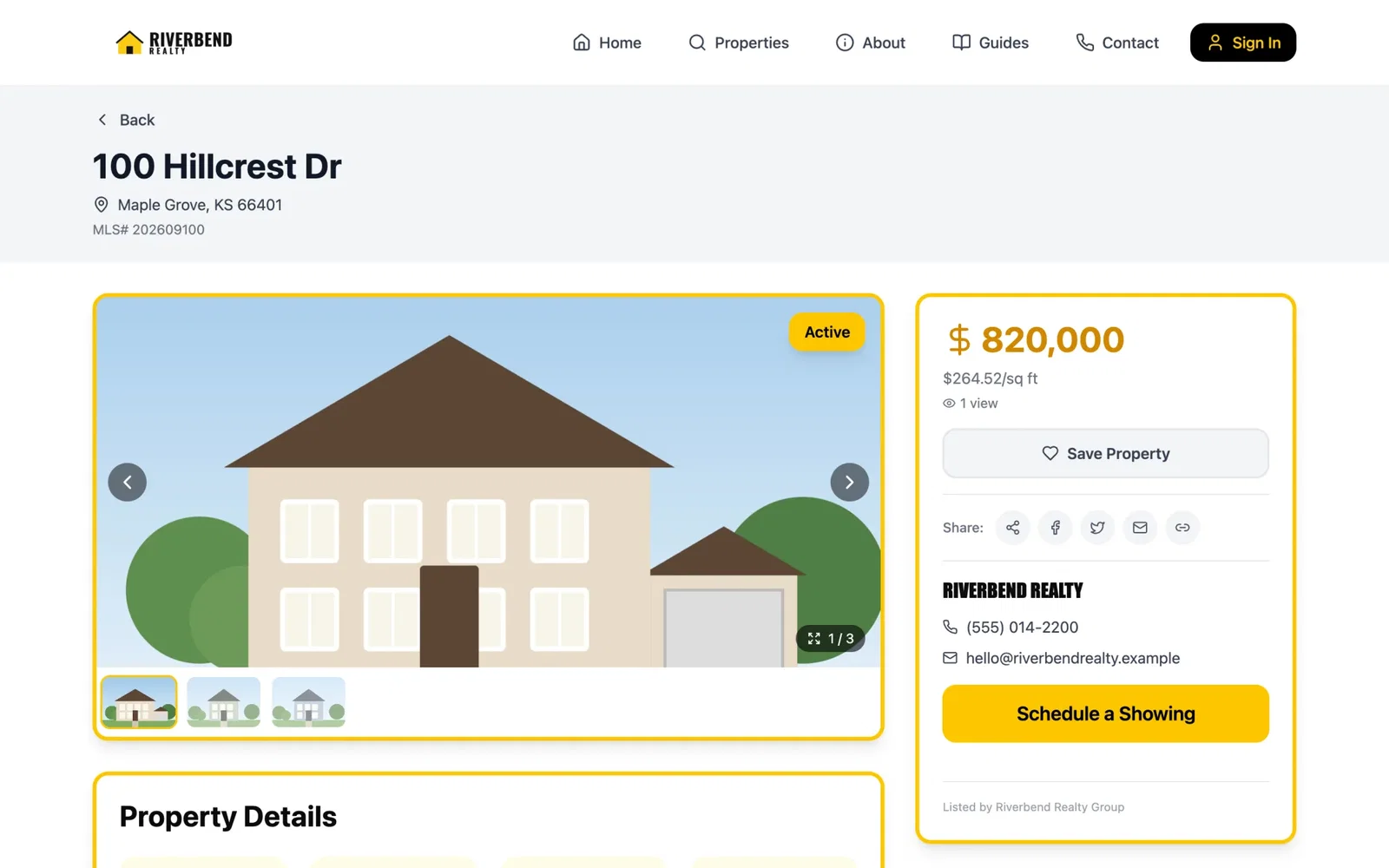
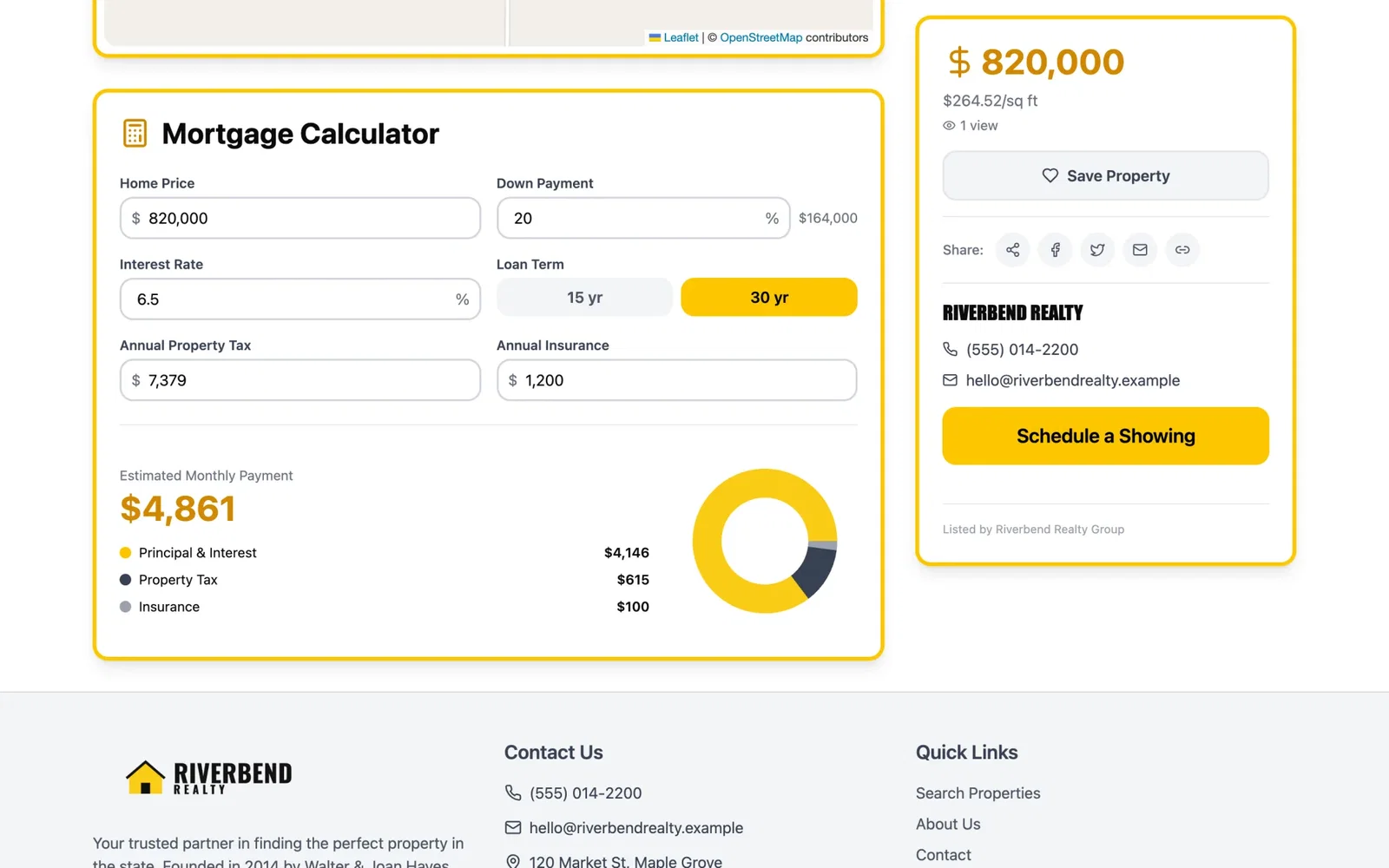
Real screens from the site, shown with a sample brokerage and illustrated sample listings.
How the listing pipeline works
The site reads from the brokerage’s own copy of the MLS data, not a live third-party widget, which is what makes it fast and fully branded.
What’s inside
- MLS sync every two hours across eight property classes, with photos every four hours and a daily metadata refresh.
- Clean-up jobs that remove listings no longer in the MLS and detect and repair dead photo links.
- Pre-built caches for the brokerage’s own listings, priority counties and search suggestions, so common searches don’t scan thousands of records.
- Search with location suggestions, filters that live in the URL, a grid and an interactive map.
- Buyer accounts with email or Google sign-in, saved homes, saved searches, and a daily 9 a.m. alert email with new matches and price changes.
- An agent dashboard with contacts, buyer activity and site analytics, and lead routing to agents by email.
- MLS compliance: listing attribution on every property and the required data disclaimer.
Built with
- React, TypeScript, Vite and Tailwind CSS: the website.
- Firebase and Cloud Functions: the listing database, accounts, scheduled sync and alert emails.
- A RETS client: the connection to the regional MLS feed.
- Leaflet and OpenStreetMap: the map search, with no per-view map fees.
- Prerendering and structured data: pages search engines and AI tools can read.
What changed for the brokerage
Most of the gains came from careful work after launch, measured and written down as it shipped.
- Accurate listings. A reconciliation pass removed 19,044 stale records, taking the database from 34,356 documents to 15,312 against 15,335 active in the MLS.
- Faster on phones. Resizing listing photos cut a screen of listing cards from 8.3 MB to 1.4 MB, and the default search view runs its queries in parallel, about three times faster.
- No more hanging pages. On a dropped mobile connection, listing pages now recover on their own in about eight seconds.
- Visible to search and AI. The homepage went from a 2.8 KB empty shell to about 65 KB of readable content with structured data, the same day an audit flagged it.
- Safer by design. A security-rules gap was closed and is now covered by 33 automated tests.
Want your website to do more than list your own homes?
If your site is a brochure while buyers search somewhere else, owning your data and your search can change that.
Your Software Department™ builds and keeps improving sites like this on a flat monthly subscription: unlimited software requests, daily progress updates, and most requests shipped in 3–7 days. For a simpler site, Website By Friday™ gets you live fast. See how Your Software Department works →
Questions about real estate websites with MLS search
Yes, where its MLS allows it. This site syncs the regional MLS feed into the brokerage’s own database every two hours, with the required listing attribution and data disclaimer on every property.
Owning a copy of the data makes the site faster, fully branded and readable by search engines, and it allows features like saved-search emails and custom rural filters.
Buyers save a search, and a daily email at 9 a.m. sends new matches and price or status changes.
Scheduled jobs remove listings that are no longer in the MLS and detect and repair dead photo links. One clean-up pass removed 19,044 stale records.
Yes. Peace Builders, an Indiana software studio, builds custom websites and data integrations for real estate brokerages and other small businesses.
Want buyers searching on your site, not someone else’s?
Tell us how buyers find you today. We’ll tell you honestly what your own search would take.